Loop Labs
Developed as part of a freeform project on student engagement, I served as the primary developer for a music-based web application designed for public spaces.
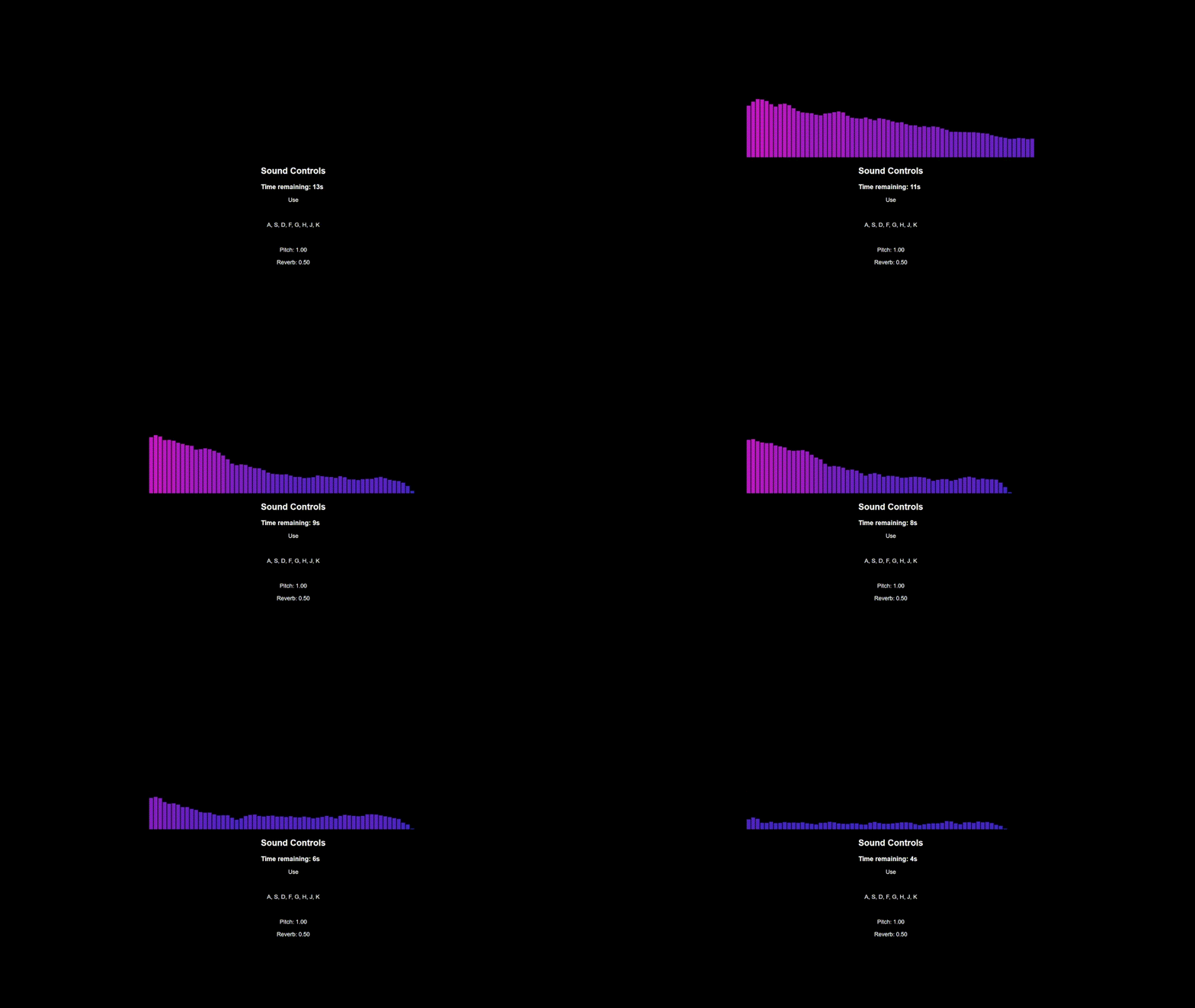
Interactive music-making interface for student collaboration
Overview
Working in a group of three, we explored ways to increase student interaction within the university's student union. Our solution involved a reusable and expandable music creation program that lowered the barrier to entry for creative expression.
The Problem
The Student Union is often perceived as a quiet, functional workplace rather than a social hub. While a piano is available, its high skill floor limits engagement. We wanted to create a tool with a lower barrier to entry that encourages collective creativity.
Research & Analysis
Our research began by analyzing JavaScript audio tools and existing music apps like Patatap and Bloom to ensure technical feasibility. We studied how keyboard-controlled soundboards could be adapted into a physical installation using existing campus infrastructure, such as projectors and speakers.
Market analysis revealed gaps in current tools—many require subscriptions or lack collaborative features. Loop Labs was designed to bridge these gaps by combining public interactivity with live sound manipulation.
The Solution
Loop Labs: A simple yet powerful music-making device. By leveraging the Howler.js library, we created a platform where students could collaborate on soundscapes, turning the Student Union into an immersive audio environment.
Deliverables
Technical Implementation
I served as the Lead Developer, managing the codebase via GitHub. We chose GitHub Pages for deployment to ensure the project remained accessible for long-term collaboration and demonstration.
Project Documentation
We produced two comprehensive proposals: an initial feasibility study and a final report detailing the user feedback and technical outcomes of the prototype.
Outcomes
The project successfully demonstrated how accessible UX design can transform a static physical space into an engaging social experience. I learned how to manage technical constraints in a web-based audio project while discovering the potential for hybrid digital-physical installations.
View on GitHub →